


International Demonstration Teaching Team
for the Course of Electrotechnics and Electronics Technology
一、课程简介
《电工与电子技术》(Electrotechnics and Electronics Technology )是西里西亚智能科学与工程学院机械设计、制造及其自动化专业本科二年级学生的必修课程,该课程共计64学时,4学分,采用全英文教学模式,春季学期开设。课程由波兰西里西亚技术大学与燕山大学电气工程学院中外双方教师联合授课。该课程以电工技术和电子技术为基础,融合了直流电路、交流电路、模拟电路和数字电路等内容,以解决工程领域的实际问题为导向,旨在培养学生的专业素养及创新思维,对实现专业培养目标具有重要支撑作用。
Introduction
"Electrotechnics and Electronics Technology" is a compulsory course for second-year undergraduates majoring in Mechanical Design, Manufacturing, and Automation of the Silesian College of Intelligent Science and Engineering at Yanshan University. The course spans 64 teaching hours, carries 4 credits, and is delivered entirely in English during the spring semester. It is jointly taught by faculty from the Silesian University of Technology in Poland and the School of Electrical Engineering at Yanshan University in China.
The course is based on Electrotechnics and Electronics Technology , integrating contents of DC, AC, analog, and digital circuits. With a focus on solving and practical problems in engineering, it aims to cultivate students' professional competence and innovative thinking, playing a critical supporting role in achieving the program's educational objectives.
二、团队成员
Team Members
Anna Piwowar,博士,担任《电工与电子技术》课程的外方教师。现就职于西里西亚技术大学电气工程与计算机科学学院,电气工程系副教授。主要研究方向包括模拟和数字信号处理、非稳态系统、参数系统的分析和合成、带时变参数的滤波器设计、改善电能质量。
Anna Piwowar, PhD, foreign teacher for Electrotechnics and Electronics Technology , assistant professor at the Department of Electrical Engineering and Computer Science, Faculty of Electrical Engineering of Silesian University of Technology. Her primary research interests include the analog and digital signal processing, non-stationary systems, the analysis and the synthesis of parametric systems, design of filters with time varying parameters, and the improvement of power quality.
杨秋霞,博士,《电工与电子技术》课程的中方教师。燕山大学电气工程学院电气工程系副教授。主要研究方向包括综合能源系统优化调度、微电网控制策略等。教学方面,主要讲授电气控制、工厂供电、电工与电子技术等课程。
Yang Qiuxia, PhD, Chinese teacher for Electrotechnics and Electronics Technology, associate professor in the Department of Electrical Engineering at the School of Electrical Engineering of Yanshan University. Her research focuses on optimizing the scheduling of integrated energy systems and microgrid control strategies. She teaches courses such as Electrical Control, Factory Power Supply, and Electrotechnics and Electronics Technology .
袁精,硕士,《电工与电子技术》课程的中方实验教师,燕山大学电气工程学院电气工程系实验师,主要从事电机及拖动、电工与电子技术、EDA等实验教学及创新创业教育工作。
Yuan Jing, Chinese laboratory teacher specializing in Electrotechnics and Electronics Technology from the Department of Electrical Engineering, School of Electrical Engineering of Yanshan University. She is mainly engaged in experimental teaching of motors and traction, Electrotechnics and Electronics Technology , EDA, and innovation and entrepreneurship education etc.
三、团队合作
Teamwork
在课程开始前,中波双方教师依据中外联合课程规范化建设项目,通过电子邮件的方式,就教学内容、教学安排及学生跨文化交流能力的培养等方面,进行了积极且有效的沟通与交流。本学期依据上一学期的教学反馈对课程进行了全面而细致的规划,对内容进行了优化调整。图1 为中方教师和波方教师邮件沟通。
Before the start of the course, Chinese and Polish teachers, in accordance with the Sino-foreign joint curriculum standardization project, actively and effectively communicated and exchanged views via email on teaching content, teaching arrangements, and the development of students' cross-cultural communication skills. Based on the feedback from the previous semester, the course was comprehensively and carefully planned for this semester, and the content was optimized and adjusted. Figure 1 shows the email communication between Chinese and Polish teachers.
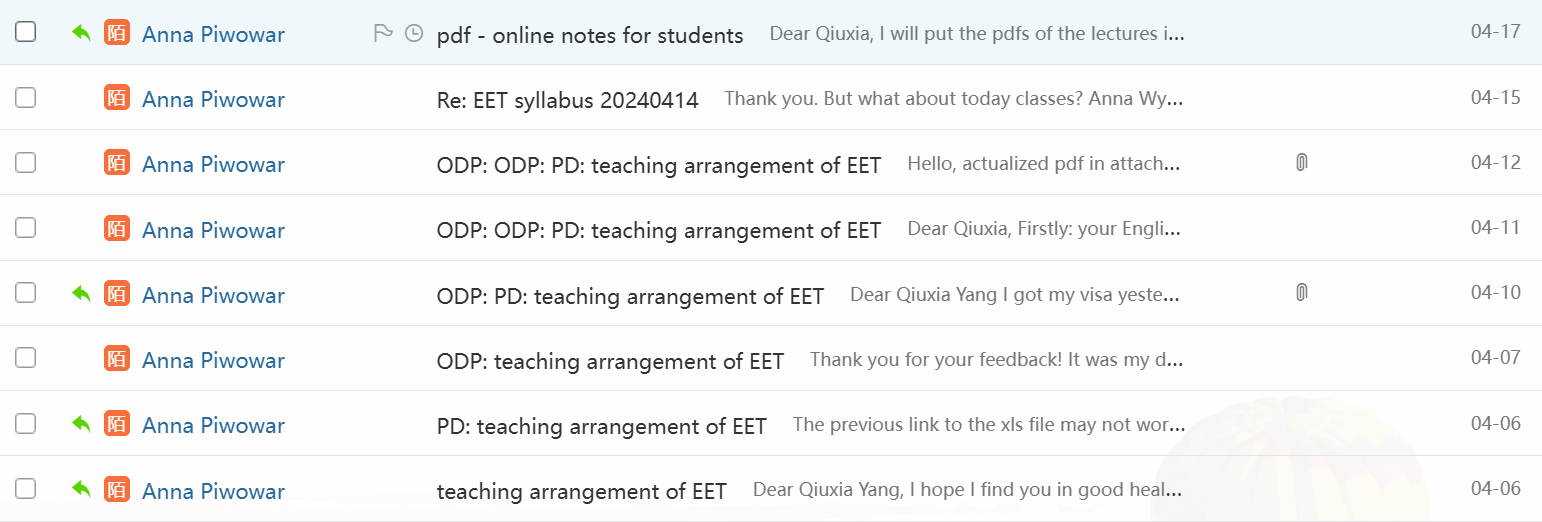
图1 和波方教师邮件沟通
Figure 1 Email communication with Polish teachers
波方教师抵达中国后,院方组织了一场中波教师交流座谈会。双方教师深入探讨并进一步明确了教学内容的具体细节,详细确认了课程的课时分配、组织形式以及考核方式等关键教学安排。通过这次座谈会,双方教师达成了一致意见,确保了课程教学工作的顺利开展。
After the Polish teachers arrived in China, the college organized an exchange meeting for the Chinese and Polish teachers. The two sides discussed and further clarified the specific details of the course content, key teaching arrangements such as class time allocation, organization format, and assessment methods. Through this meeting, the two sides reached a consensus ensuring the smooth development of teaching.
在授课过程中,Piwowar博士负责课程理论知识的讲授,图2为Piwowar博士授课的照片。她讲课非常有感染力,风趣生动,不仅将波兰西里西亚技术大学的独特风格和文化融入到教学中,还积极引导学生在课堂上踊跃发言和参与讨论。这种互动式教学方法使得学生们能够对课堂内容有更深入的理解和掌握。
Dr. Piwowar was responsible for teaching the theoretical content of the course. Figure 2 shows a photo of Dr. Piwowar teaching. Her lectures were highly engaging, humorous, and lively. She not only incorporated the unique style and culture of the Silesian University of Technology into her lecture, but also actively encouraged students to participate in discussions and express their ideas in class. This interactive teaching method enabled students to gain a deeper understanding and grasp of the course content.
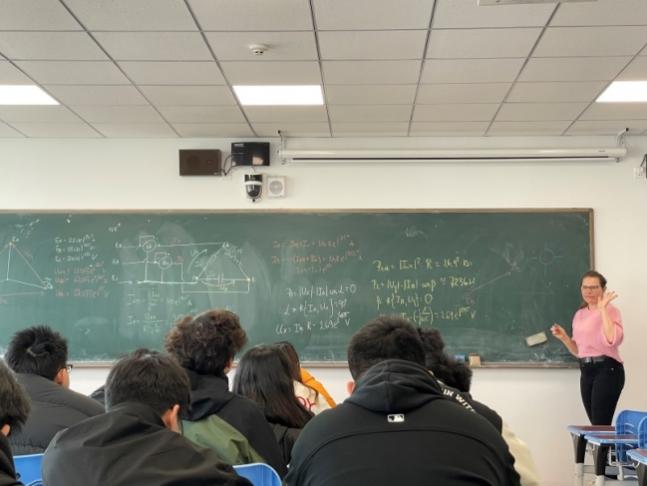
图2 Dr. Piwowar授课照片
Figure 2 photo of Dr. Piwowar teaching
图3为Piwowar博士和学生讨论问题的照片,课下学生积极主动的和老师讨论问题。
Figure 3 is a photo of Dr.Piwowar discussing problems with students. Students actively discussed problems with the teacher after class.
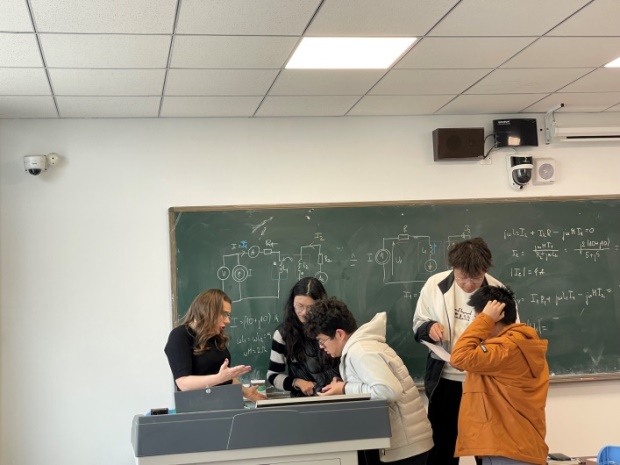
图3 Dr. Piwowar答疑照片
Figure 3 Photo of Dr. Piwowar discussing problems with students
图4--图6为Piwowar博士和中方教师一起指导学生做实验以及和实验老师的合影。
Figures 4 to 6 show Dr. Piwowar and Chinese teachers guiding students’ experiments and taking photos with the experimental teachers.
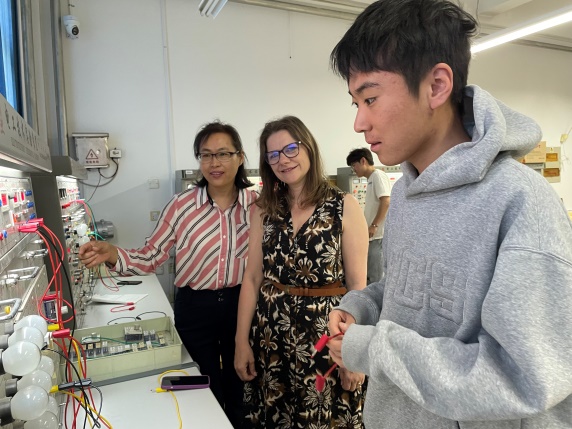
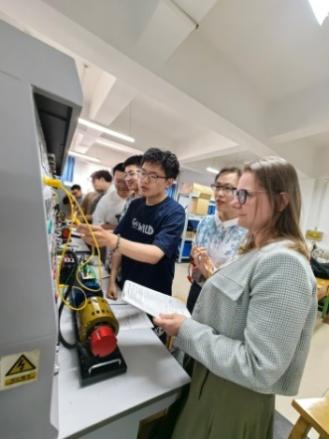
图4 指导实验一照片 图5 指导实验四照片
Figure 4 : Photos of Experiment 1 Figure 5: Photos of Experiment 4
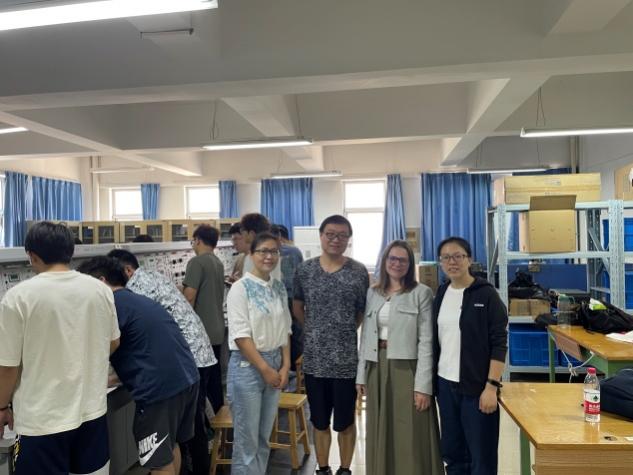
图6 和实验指导老师合影
Figure 6 Photo with the experimental teacher
为了及时了解学生的学习情况,课程还特别设定了5次随堂测试,中方老师还安排了线上及线下答疑。这些评估机制有助于教师实时掌握学生的学习进度和理解程度,从而更好地指导学生的学习。
In order to better understand students' learning situation, five in-class tests were arranged for this course. Moreover, the Chinese teachers also provided online and offline Q&A sessions. Those evaluation mechanisms helped both the Chinese and the foreign teachers timely track students' learning progress and understanding so as to offer more effective guidance for students.
课堂上,中方老师会借助学习通教学平台与学生互动(图7),课后向学生发送课程相关资料,并解答学生提出的问题。此外,外方老师还利用西里西亚技术大学的远程学习平台和学生互动(图8)。中方老师还及时与外教沟通,确保外教能够根据学生们的反馈对课程内容进行及时的调整和优化。此外,中方老师还会密切关注学生们的学习基础及对这门课程的学习情况,依据学生的实际需求提供针对性的学习建议。
During class, Chinese teachers interacted with students by using the Xuexitong online teaching platform (Figure 7).After class teachers sent course materials and helped answer students' questions. In addition, students had the opportunity to use the Remote Education Platform of the Silesian University of Technology (Figure 8).The Chinese teacher also communicated with the foreign teacher in a timely manner to ensure that the course content can be adjusted and optimized according to students’ feedback. Additionally, the Chinese teacher paid close attention to students’ learning foundation and their progress in the course and offered targeted learning suggestions according to their needs.
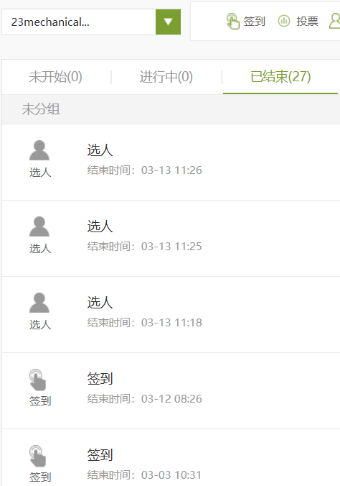
图7 利用学习通平台与学生互动
Figure 7: Interactions with students on Xuexitong platform
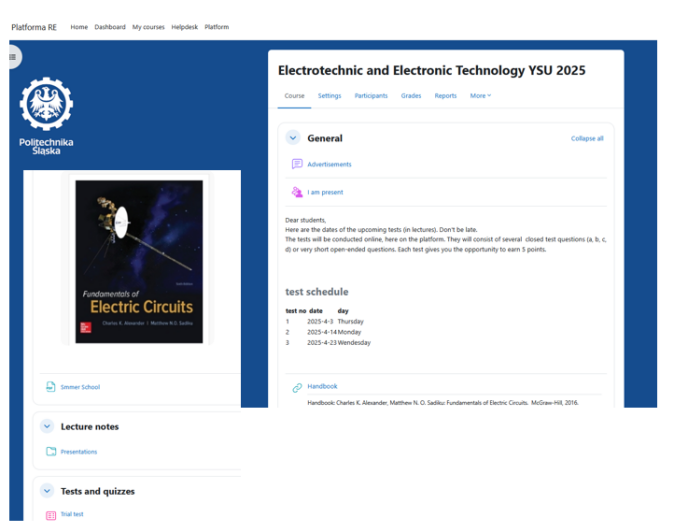
图8 利用西里西亚技术大学的远程学习平台与学生互动
Figure 8: Interactions with students on SUT Remote Education Platform
除了教学合作,Piwowar博士和电气工程系师生也进行了学术上的交流,不仅去课题室和研究生进行交流,还为电气系师生做了精彩的学术报告。图8为Piwowar博士为电气工程系师生做学术报告的照片。
In addition to teaching collaboration, Dr. Piwowar also engaged in academic exchanges with faculty and students of the School of Electrical Engineering of Yanshan University. She not only visited the research lab but also gave a wonderful academic presentation to faculty and students. Figure 8 shows a photo of Dr. Piwowar giving an academic presentation to faculty and students in the Department of Electrical Engineering.
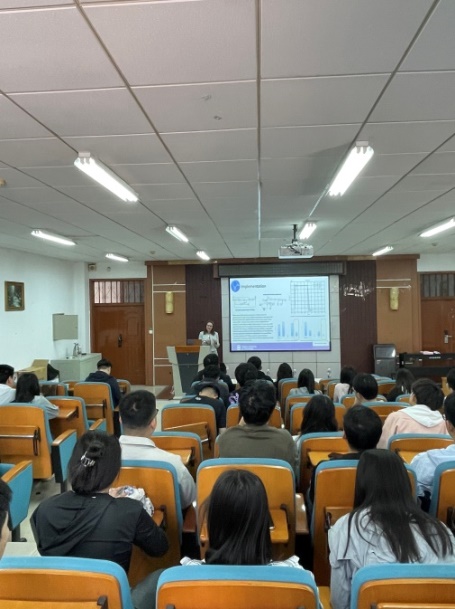
图8 Piwowar博士为电气系师生做学术报告
Figure 8 Dr. Piwowar gave an academic report to teachers and students of the Department of Electrical Engineering
图9为参观电气系课题室,和研究生进行沟通交流。
Figure 9 shows Dr. Piwowar visiting the Department of Electrical Engineering laboratory and communicating with graduate students.
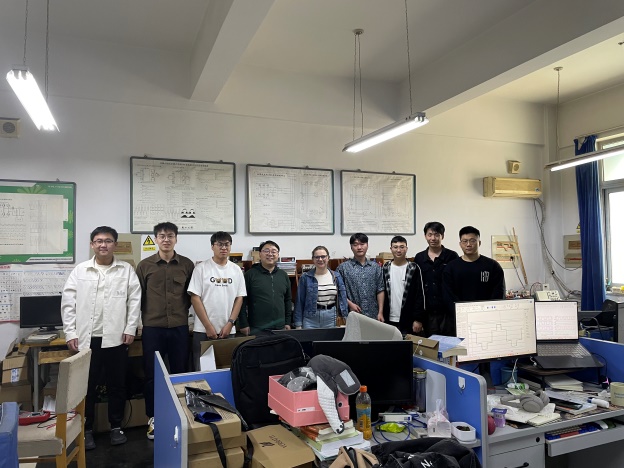
图9 Piwowar博士和电气系研究生在交流
Figure 9: Dr. Piwowar communicated with graduate students from the Department of Electrical Engineering
四、课程内容
Course Information
《电工与电子技术》课程以大学物理学为理论基础,将直流电路、交流电路、模拟电路和数字电路融合在一起,向学生传授关于电路的基础知识。整个课程分为两个主要部分:理论课程和实验课程。理论课程共计56学时,涵盖了电路各部分的核心概念、基本原理和应用方法等内容,帮助学生建立起系统的理论框架。实验课程共计8学时,通过在实验室亲自动手搭建电路,让学生在实践中加深对理论知识的理解和应用,提高动手能力和解决实际问题的能力。
The course "Electrotechnics and Electronics Technology", is based on College Physics, integrating DC circuits, AC circuits, analog circuits and digital circuits to impart students with fundamental knowledge about circuits. The course is divided into two main parts: theory and experiment. The theory course totals 56 hours, covering the core concepts, basic principles, and application methods of each circuit component, enabling students to establish a systematic theoretical framework. The laboratory part includes 8 hours, during which students build circuits in the lab, deepen their understanding and application of theoretical knowledge, and improve their practical skills and problem-solving abilities.
1、理论课程内容:
1) 电路的基本概念与基本定律
教学目标:
理解电路模型及理想电路元件的电压与电流关系;了解电功率和额定值的意义;理解掌握基尔霍夫定律;掌握电源两种类型及三种工作方式。
主要内容:
(1)电路与电路模型;(2)电路元件;(3)电压与电流的参考方向;(4)欧姆定律;(5)基尔霍夫定律;(6)电源的工作状态及电源的等效变换;(7)电功率和能量;(8)非线性元件。
1、Theoretical Course Content:
1) Basic concepts and electrical circuit laws
Teaching objectives:
Upon completion of the course, students should be able to understand the circuit model and the relationship between voltage and current of ideal circuit elements, the meaning of electric power and rated values. They should understand and apply Kirchhoff’s laws, master the two types of power supplies (DC and AC) and understand the principles of operation of three-phase systems.
Main content:
(1) Circuits and circuit models; (2) Circuit elements; (3) Reference directions of voltage and current; (4) Ohm's law; (5) Kirchhoff's law; (6) Working conditions of power supplies and equivalent transformations of power supplies; (7) Electric power and energy; (8) Non-linear elements
2)电路的分析方法
教学目标:掌握用多种电路分析及计算的方法。
主要内容:
(1) 支路电流法;(2)节点电压法;(3)叠加原理;(4)戴维南定理。
2) Circuit analysis method
Teaching objectives: Students will develop the ability to master and apply various circuit analysis and calculation methods.
Main content:
(1) Branch current method; (2) Node voltage method; (3) Superposition principle; (4) Thevenin theorem.
3)正弦交流电路
教学目标:
理解正弦量的相量表示法,掌握单一参数元件正弦交流电路的计算方法。理解和掌握有功功率、功率因数的概念和计算,理解无功功率和视在功率的概念。
主要内容:
(1)正弦量的三要素;(2)正弦量的相量表示法;(3)单一参数元件的交流电路;(4)RLC串联的交流电路;(5)正弦交流电路的计算。
3) AC circuit
Teaching objectives:
To enable students to understand the phasor representation of sinusoidal quantities and to master calculation methods for single-phase sinusoidal AC circuits. Understand and master the concepts and calculations of active power and power factor, as well as the concepts of reactive power and apparent power.
Main content:
(1) The three elements of sinusoidal quantities; (2) The phasor representation of sinusoidal quantities; (3) AC circuits with a single R, L or C element; (4) AC circuits with RLC series and paraller connections; (5) Calculations on sinusoidal AC circuits.
4)三相供电与用电
教学目标:
掌握三相电源及三相负载各种联结方式下,线电压与相电压、线电流与相电流的关系;掌握三相电路功率的计算。
主要内容:
(1) 三相电动势;(2)三相电源的连接;(3)三相电路负载的连接;(4)三相电路的功率。
4) Three-phase power supply and power consumption
Teaching objectives:
Master the relationship between line voltage and phase voltage, as well as line current and phase current under various connection modes of three-phase power supply and three-phase load. Grasp the calculation of three-phase circuit power.
Main content:
(1) Three-phase electromotive force; (2) Connection of three-phase power supply; (3) Connection of three-phase circuit load; (4) Power of three-phase circuit.
5)电动机械
教学目标:
了解磁路的基本概念及交流铁心线圈电路的电磁关系。掌握单相变压器的工作原理。理解和掌握三相异步电动机的工作原理、机械特性。掌握三相异步电动机调速方法。
主要内容:
(1) 电流的电磁感应;(2)电磁铁;(3)耦合电路的电磁效应,变压器;(4)三相异步电动机;(5)三相异步电动机的起动、调速与制动
5) Electric machinery
Teaching objectives:
Understand the basic concepts of magnetic circuits and the electromagnetic relationships within AC iron-core coil circuits. Master the operating principles of single-phase transformers.Understand and master the operating principles and mechanical characteristics of three-phase asynchronous motors, and master the speed control methods for three-phase asynchronous motors.
Main content:
(1) Electromagnetic effect of current; (2) Electromagnet; (3) electromagnetic induction and coupled circuits, Transformer; (4) Three-phase asynchronous motor; (5) Starting, speed regulation and braking of three-phase asynchronous motor.
6)半导体器件
教学目标:
理解半导体的导电特性;掌握半导体二极管的工作原理及其特性曲线、主要参数及应用。掌握晶体管的结构、工作原理、特性曲线和主要参数。
主要内容:
(1)半导体二极管;(2)晶体管。
6) Semiconductor devices
Teaching objectives:
Understand the conductive properties of semiconductors. Master the operating principles, characteristic curves, main parameters, and applications of semiconductor diodes. Master the structure, operating principles, characteristic curves, and main parameters of transistors.
Main content:
(1) Semiconductor diode; (2) Transistor.
7)直流稳压电源
教学目标:
理解直流稳压电源的组成、各部分的作用及参数计算。掌握单相桥式不可控整流电路的工作原理。掌握简单的电容滤波电路及电压稳定的方法。了解串联稳压电路的工作原理及三端固定集成稳压器。
主要内容:
(1)单相桥式整流电路;(2)滤波电路; (3) 稳压器;(4)直流稳压电源。
7) DC regulated power supply
Teaching objectives:
Understand the composition of a DC regulated power supply, the functions of its components, and parameter calculation. Master the operating principles of a single-phase bridge uncontrolled rectifier circuit. Master simple capacitor filter circuits and voltage stabilisation methods and understand the operating principles of series voltage regulator circuits and three-terminal fixed integrated voltage regulators.
Main content:
(1) Single-phase bridge rectifier circuit; (2) Filter circuit; (3) voltage regulators (stabilisers) (4) DC regulated power supply.
8)集成运算放大器
教学目标:
理解理想运放“虚短”、“虚断”的含义以及两种工作状态的特点和分析方法。掌握各种集成运放组成的运算电路的工作情况及输入输出关系。理解电压比较电路的原理和应用;了解各种信号发生电路。
主要内容:
(1)集成运算放大器的组成及参数;(2)模拟信号运算电路;(3)电压比较电路。
8) Integrated operational amplifier
Teaching objectives:
Understand the meaning of "virtual short" and "virtual open" in ideal op amps, as well as the characteristics and analysis methods of these two operating states. Master the operation of operational circuits composed of various integrated op amps and the input-output relationships. Understand the principles and applications of voltage comparator circuits and gain an understanding of various signal generation circuits.
Main content:
(1) Composition and parameters of integrated operational amplifiers; (2) Analog signal operation circuits; (3)voltage comparator circuits.
教学目标:
掌握基本逻辑运算及逻辑门电路。掌握逻辑代数的基本运算法则、公理、定理;逻辑关系式的化简。掌握组合逻辑电路的分析及设计。了解加法器、编码器、译码器逻辑功能分析。
主要内容:
(1)逻辑代数及逻辑门电路;(2)逻辑代数运算及逻辑函数化简;(3)组合逻辑电路分析与设计。
9) Logic gate circuits and combinational logic circuits
Teaching objectives:
Enable students to master basic logical operations and logic gate circuits, master the basic operational rules, axioms, and theorems of logic algebra and apply them to simplify logical relations. Master the analysis and design of combinational logic circuits and understand the analysis of the logical functions of adders, encoders, and decoders.
Main content:
(1) Logic algebra and logic gate circuits; (2) Logic algebra operations and logic function simplification; (3) Combinational logic circuit analysis and design.
2、 实验课程内容
教学目标
通过课程实验使学生加深对电工技术、电子技术基础知识的理解,能够针对电工技术、电子技术的基本原理、元件参数选择、电路搭建、检查和纠错等问题,计算并实施验证实验,并对实验数据进行整理、分析以得出结论;熟悉相关实验测试仪器、设备及其使用方法,了解实验室各项管理规定。培养学生初步具备独立完成实验、设计实验、对实验结果进行分析的能力。使学生具有解决工程实际问题的能力。
主要内容
(1)戴维南定理实验
(2)三相异步电动机实验
(3)集成运放的运算电路
(4)门电路的测试及组合逻辑电路的分析实验
2. Laboratory Course Content
Teaching Objectives
Through the course experiments, students will deepen their understanding of the fundamentals of electrotechnics and electronics technology. They will be able to perform calculations and verification experiments on fundamental principles, select component parameter selection, construct circuit, carry out inspection and error correction, and organize and analyze experimental data to draw valid conclusions. They will also become familiar with relevant experimental testing instruments and equipment and their applications, as well as understand laboratory management regulations. Those activities will cultivate students' initial ability to independently complete experiments, design experimental procedures, and analyze results. Enable students to solve practical engineering problems. Furthermore, students will develop skills in teamwork, report writing, and project evaluation.
Main content
(1) Thevenin theorem experiment
(2) Three-phase asynchronous motor experiment
(3) Integrated operational amplifier circuit
(4) Gate circuit testing and combinational logic circuit analysis experiments
实验要求:能使用常用的电工仪表、仪器、电工设备及电子元件;能按电路图接线、查线和排除简单的线路故障;能进行实验操作、测取数据和观察实验现象;能整理分析实验数据、绘制曲线并写出整洁的、条理清楚的、内容完整的实验报告。
Laboratory requirements: Students should be able to use commonly used electrical meters, instruments, electrical equipment and electronic components, connect wires according to circuit diagrams, check wires and troubleshoot simple line faults, perform experimental operations, measure data and observe experimental phenomena, organize and analyze experimental data, draw curves and write neat, well-organized and complete experimental reports.
五、参考书籍
1. AllanR.Hambley: Electrical Engineering Principles and Applications
2. 张晓辉等,电工与电子技术
3. 张晓辉等,电工技术(第三版),
4. 荣雅君主编,电子技术(第三版),
Reference Textbooks
1. AllanR.Hambley: Electrical Engineering Principles and Applications
2. Zhang Xiaohui et al., Electrotechnics and Electronics Technology
3. Zhang Xiaohui et al., Electrical Engineering Technology (3rd Edition)
4. Rong Yajun, ed., Electronic Technology (3rd edition)
六、教学成果
Teaching Outcomes
通过中外联合教学模式,《电工与电子技术》课程在教学效果上取得了显著成效。课程采用全英文授课,融合了波兰西里西亚技术大学与中国燕山大学双方教师的优势和特色,有效激发了学生的学习兴趣和参与度。外方教师在课堂理论教学和实践指导方面表现突出,中方教师则在课程组织管理及课后指导方面给予强有力的支持。互动式教学方法的实施,极大地提高了学生的课堂参与度和对复杂理论知识的理解能力。
The international joint teaching model for the course "Electrotechnics and Electronics Technology" has achieved remarkable outcomes in education effectiveness. Conducted entirely in English, this course effectively integrates the strengths and unique characteristics of faculty members from the Silesian University of Technology in Poland and Yanshan University in China, significantly enhancing students' interest and engagement in learning. The foreign teachers excel in theoretical teaching and practical guidance, while the Chinese teacher provides substantial support in course organization and after-class mentoring. The interactive teaching method has greatly improved students' class participation and their ability to understand complex theoretical knowledge.
综上所述,《电工与电子技术》课程的中外联合教学模式有效提升了学生的专业知识、国际视野和创新能力,为学生未来的专业发展与国际交流奠定了坚实基础。
In summary, the international joint teaching model of the course "Electrotechnics and Electronics Technology" has effectively enhanced students' professional knowledge, international perspective, and innovative capabilities, laying a solid foundation for their future professional development and international exchanges.
七、展望
Future Work
中外联合办学是高等教育国际化的关键途径之一。通过引入国外优质教育资源,旨在提升我国高等教育机构的教育质量和水平,加速其国际化进程。在《电工与电子技术》课程的教学实践中,充分发挥西里西亚智能科学与工程学院的办学优势,有效融合中外优质教育教学资源,优化专业课程架构,进一步提升教育教学质量和人才培养层次。为学院开展高质量教育教学改革及培养高素质专业人才提供了坚实的理论和实践支撑。
Sino-foreign joint school running is one of the keys to higher education internationalization. By introducing high-quality educational resources from abroad, Chinese higher education institutions aim to enhance the quality and level of higher education and accelerate their internationalization process. In the teaching practice of the course "Electrotechnics and Electronics Technology", Silesian College of Intelligent Science and Engineering at Yanshan University effectively integrate high-quality educational and teaching resources at home and abroad, optimize the professional course structure, and further enhance the quality of education and teaching as well as the level of talent cultivation. It has provided solid theoretical and practical support for the College’s initiatives of high-quality educational reform and high-caliber professional talents cultivation.
此外,中波两国的老师还考虑提议开发一种创新的双语(英汉)出版物,以帮助学生掌握电气和电子工程的基础知识,并提高他们的语言能力。这样的教材不仅会成为一种有效的教学工具,还将促进跨文化交流,并代表技术教育进一步国际化的重大进展。
Moreover, the Chinese and Polish faculty members have proposed the development of an innovative bilingual (English–Chinese) publication that will support students in both mastering the fundamentals of electrical and electronic engineering and in strengthening their language competence. Such a work will not only provide an effective teaching tool, but will also foster intercultural collaboration and represent a significant step towards the further internationalization of technical education.
